
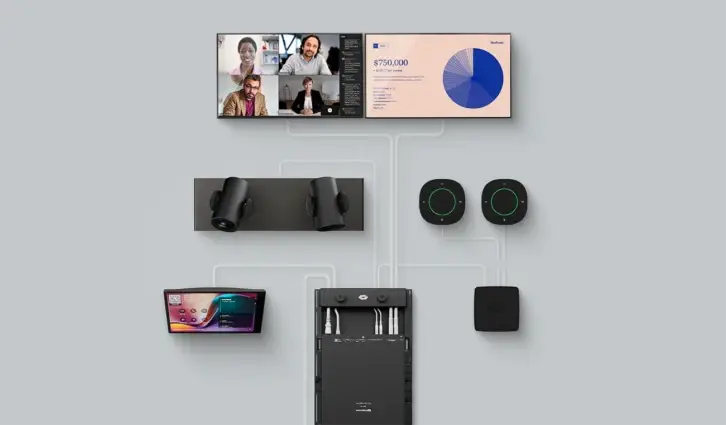
Crestron is not a consumer gadget brand. It is a professional control platform used in luxury residences, estates, yachts, and complex buildings when lighting, climate, shades, audio, video, and security need to work as one system.
In Miami and South Florida, that matters. Homes here often combine large floor plans, indoor-outdoor living, intense sun, humidity, and high expectations for design. A collection of apps is not enough. The system has to feel invisible, reliable, and ready for daily use.
This guide covers what Crestron in 2026 has released recently, which trends are shaping luxury integration, and when Crestron is the right recommendation for a Miami home.
Why Crestron Still Matters in the Luxury Market
Crestron sits at the top of the professional automation tier, alongside platforms such as Control4 and Savant.
In simple terms:
- Control4 is often chosen for mid-to-upper residential projects that need broad compatibility and a more approachable price.
- Savant is frequently selected for a polished, design-driven media experience.
- Crestron is typically specified when the home is large, highly customized, or needs deep integration across lighting, shading, HVAC, AV, access, and outdoor systems.
For many Coral Gables, Miami Beach, Brickell, and waterfront estates, Crestron is chosen because it can scale and stay serviceable for years — not because it is the easiest DIY option. It is not. It is a dealer-installed platform.
What’s New in Crestron Home (2025–2026)
Crestron Home OS has moved quickly over the last year. These are the updates that matter most for homeowners and integrators.
Crestron Home OS 4.8 — Whole-Home Shading
Released in December 2025, this update treated shades more like lighting. Instead of managing each window as a separate task, homeowners get a dedicated shading experience across the house.
That is especially relevant in Miami. Motorized shades and shutters are not just a design feature here. They help manage heat gain, glare, privacy, and storm preparation. When shades and lighting can be controlled together, the home feels more complete.
Crestron Home OS 4.9 — Lighting Quality and Smarter Access
The January 2026 update added DALI DT8 tunable-white support through Crestron’s DIN-DLI lighting module. That means better control of white color temperature — useful for homes that want warm evening light and cleaner daylight tones without switching systems.
It also improved Smart Access for locks, including recurring and temporary access. That is practical for Miami households that use staff, contractors, guests, or seasonal visitors and do not want to hand out permanent codes.
Crestron Home OS 4.10 — Better Everyday Control
The March 2026 release focused on the interfaces people actually touch:
- Firmware upgrades for the Cevo Mini Remote, including voice control and a guided-touch experience for low light
- Support for premium partner keypads from Faradite, Atelier Luxus, and Domex
- Native support for the new 80 Series Touch Screens
This is the direction Crestron is clearly taking: fewer “tech objects,” more refined control surfaces that belong in a finished interior.
Crestron Home OS 4.11 — Configure Pro Becomes Standard
In June 2026, Configure Pro became the primary configuration tool for Crestron Home projects worldwide.
Homeowners will not use this software themselves. The benefit is indirect but important: dealers can design and deliver systems faster, more consistently, and at larger scale. Crestron also expanded validated system sizes, which helps ambitious residential projects stay inside the Crestron Home platform instead of immediately jumping to fully custom programming.
New Hardware Worth Knowing
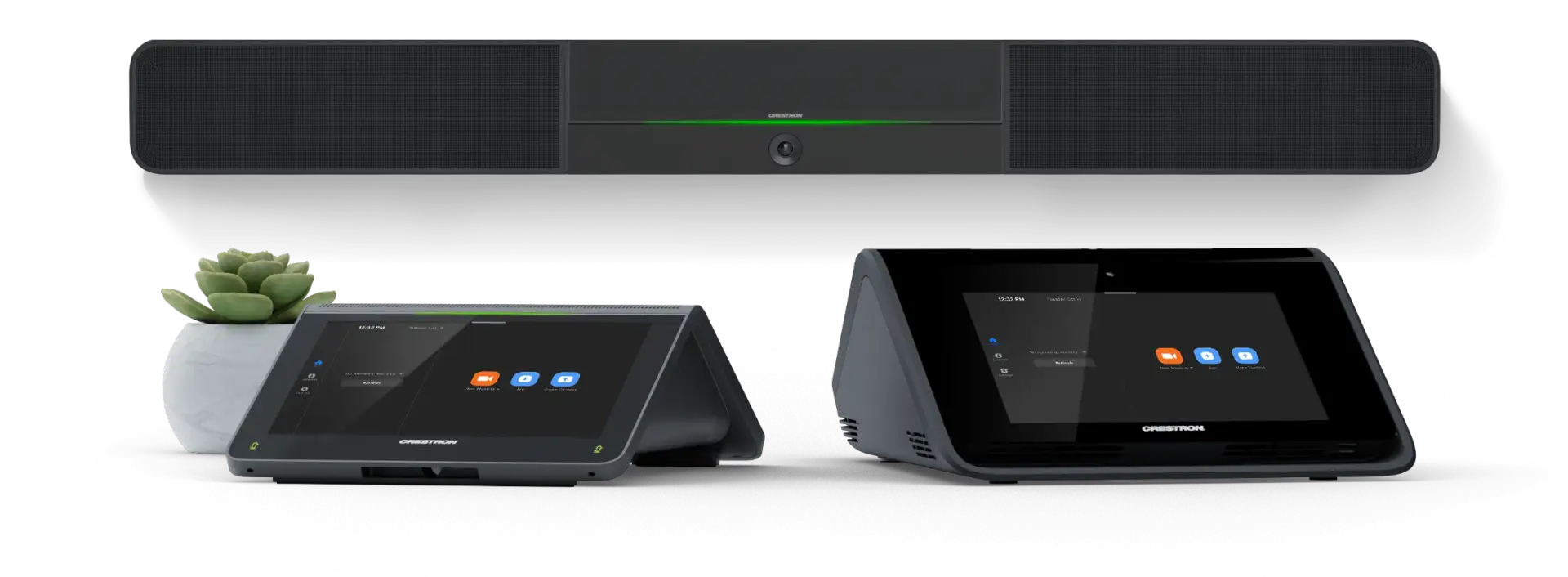
80 Series Touch Screens
Announced in January 2026 and rolled out through 2026, the 80 Series is Crestron’s new residential touch-screen family.
What stands out:
- 8-inch and 10-inch models
- Wall-mount and tabletop versions
- Black and white finishes
- Faster processing
- Radar-based proximity sensing (the screen wakes as someone approaches)
- Improved ambient-light sensing
For Miami homes, these screens work well in kitchens, primary suites, media rooms, and entry areas where a dedicated control point still feels more reliable than searching for a phone.
Cevo Mini Remote
This is one of Crestron’s most practical recent products. It is a compact handheld remote designed for streaming-first living rooms.
Instead of a bulky traditional controller, it offers a smaller form factor, tactile buttons, and customizable on-screen cells for lighting, shades, scenes, and media. For many households, this becomes the everyday control device — not the wall panel.
Cameo and Horizon Lighting Controls
Crestron also refreshed its keypad and dimmer lines:
- Cameo: unified wired and wireless look, extensive button layouts, field-replaceable buttons, RGB backlighting
- Horizon: premium metal finishes including brushed brass, dark nickel, dark bronze, and brushed black
These details matter in luxury Miami interiors. Control hardware is part of the architecture. If it looks generic, the whole system feels less considered.
Audio and Partner Integrations
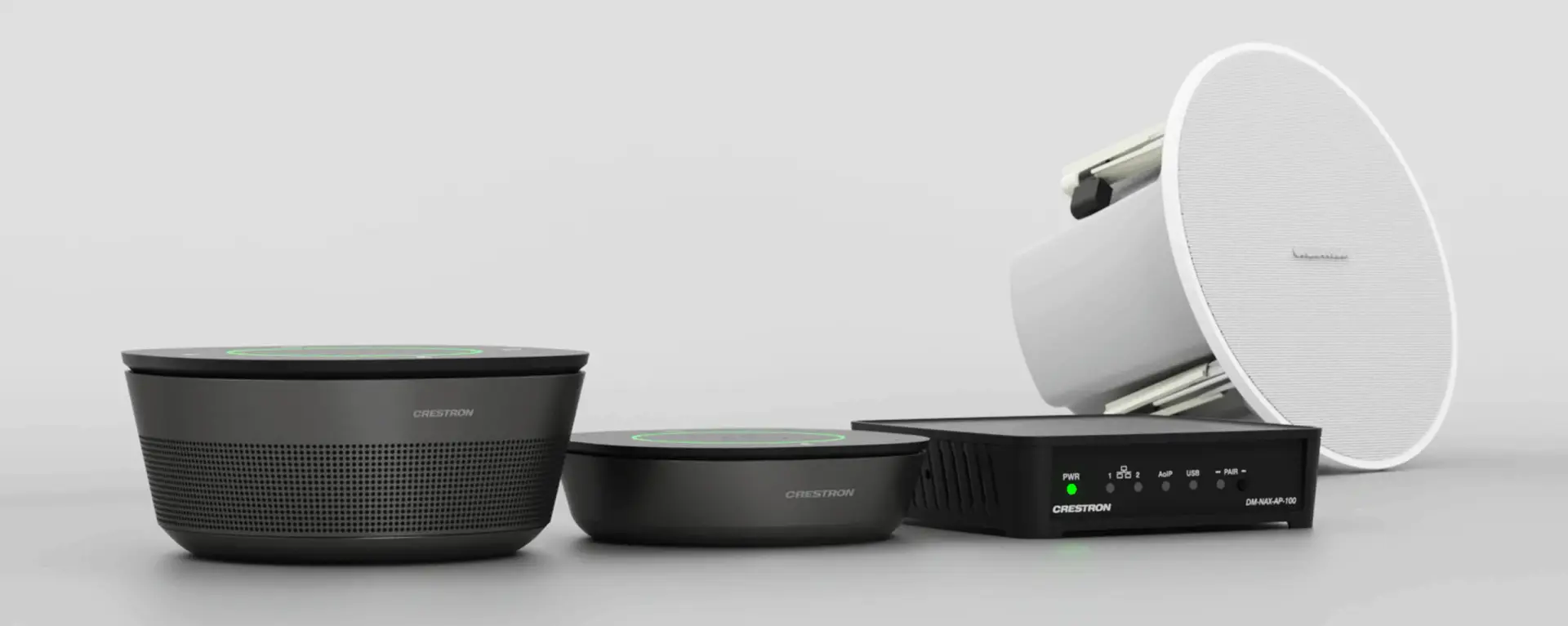
Recent ecosystem updates include Apple Music on Crestron DM NAX audio systems and official KEF drivers for Crestron Home, expected for integrators in October 2026. That continues Crestron’s push to make high-end audio feel native inside the same interface used for lighting and climate.
Trends Shaping Crestron Projects in 2026
1. Shading is now a first-class system
In South Florida, shades are as important as lights. The latest Crestron Home updates reflect that. A good 2026 design treats lighting, shading, and climate as one comfort strategy, not three separate apps.
2. Control is becoming more physical again
Phones are useful. They are not always the best interface at night, by the pool, or when guests are over. Touch screens, engraved keypads, and the Cevo Mini Remote are part of a broader return to dedicated, reliable controls.
3. Crestron Home is covering larger projects
The platform is no longer only for simpler residential jobs. Faster configuration tools and larger validated system sizes mean more luxury homes can stay on Crestron Home without immediately requiring a fully custom programmed system.
4. Design finishes are part of the specification
Horizon metal finishes and next-generation Cameo keypads show that Crestron is competing on interiors, not just processing power. In Miami’s design-driven market, that is necessary.
5. Energy, climate, and access are moving into the same dashboard
Integrations around HVAC platforms, energy insight, EV charging, and temporary lock access point to a more complete “home operations” model. For vacation homes and large properties, that is more useful than another lighting scene.
Recommendations for Miami Homeowners
Choose Crestron if:
- The home is large, custom, or includes multiple buildings or extensive outdoor living
- Lighting, shades, HVAC, audio, video, and access need to operate as one system
- You want dedicated touch screens, keypads, and a long-term professional service path
- The project is new construction or a major renovation where infrastructure can be planned early
Consider another platform if:
- The project is smaller and mainly needs lighting + a few smart devices
- Budget is closer to a mid-tier professional system than a full estate platform
- The household wants a simpler, more app-centric system with less custom engineering
Best practice in South Florida:
- Decide the platform during design, not after finishes are complete.
- Plan shading and lighting together. In Miami, sun control is comfort control.
- Specify control hardware as part of the interior design — finishes, engraving, placement.
- Build a strong network first. Crestron still depends on clean infrastructure.
- Work with an experienced integrator. The platform is only as good as the design and programming behind it.
How Crestron Fits With the Rest of a Miami Smart Home
Crestron does not replace every product in the house. In many projects it becomes the central layer that coordinates:
- Architectural lighting and keypads
- Motorized shades and shutters
- Climate systems
- Distributed audio and video
- Access control
- Selected third-party devices and scenes
That is different from a consumer setup based only on Philips Hue, Nest, Alexa, and mesh Wi-Fi. Those systems can work very well on their own. Crestron is the step up when the home needs one professional interface and one accountable integration partner.
Frequently Asked Questions
Is Crestron only for mega-estates?
No. Crestron Home has made the platform more accessible for luxury single-family homes. Full custom Crestron is still the choice for the most complex properties.
Can Crestron work with Lutron, Hue, or Nest?
In many cases, yes, through supported integrations and professional drivers. The right approach depends on the project. Sometimes Crestron should own lighting and shading completely; other times it coordinates existing systems.
Does Crestron require a subscription for basic remote access?
Crestron Home remote access is generally included with the system model rather than sold as a separate consumer add-on. Ongoing service still depends on the integrator relationship.
Is it worth upgrading an older Crestron system in 2026?
Often yes, especially if the home can move to current Crestron Home OS features: unified shading, newer touch screens, better remotes, and cleaner configuration. An on-site evaluation is the only honest way to know.
Do you specify and install Crestron in Miami and South Florida?
Yes. Professional design and installation are available across Miami-Dade, Broward, Coral Gables, Miami Beach, Brickell, and surrounding areas, with systems planned for Florida climate, outdoor living, and long-term service.
Crestron in 2026 Is More Usable, Not Less Serious
The most important Crestron story in 2026 is not a single gadget. It is the combination of better software, more refined hardware, and a clearer residential workflow.
The 80 Series touch screens, Cevo Mini Remote, Cameo and Horizon controls, whole-home shading, and Configure Pro all point in the same direction: a luxury system that is still powerful, but faster to deliver and easier to live with.
For Miami homes that need more than connected devices, Crestron remains one of the strongest professional platforms — provided it is designed early and installed by a team that understands both the technology and the way South Florida homes actually operate.
Planning a Crestron system or considering an upgrade?
Book a consultation. We can review your property, compare Crestron with other professional platforms, and recommend a system that fits the architecture, the climate, and the way you live.