
Most commercial spaces already have technology. The usual problem is not the lack of equipment. It is that the cameras, the door system, the Wi-Fi, the audio, and the lighting were installed by different companies at different times, and no single party can still administer all of them.
Each system works in isolation. The staff door uses a shared code. The cameras record but no one can easily export footage. The conference room requires three remotes. The Wi-Fi struggles when the restaurant is full. When something fails, the property manager calls five different numbers.
Smart Home Studio designs and supports commercial systems in Miami as a coordinated set — access control, video surveillance, network, audio, displays, and lighting — so the building has fewer separate vendors and a clearer path for support.
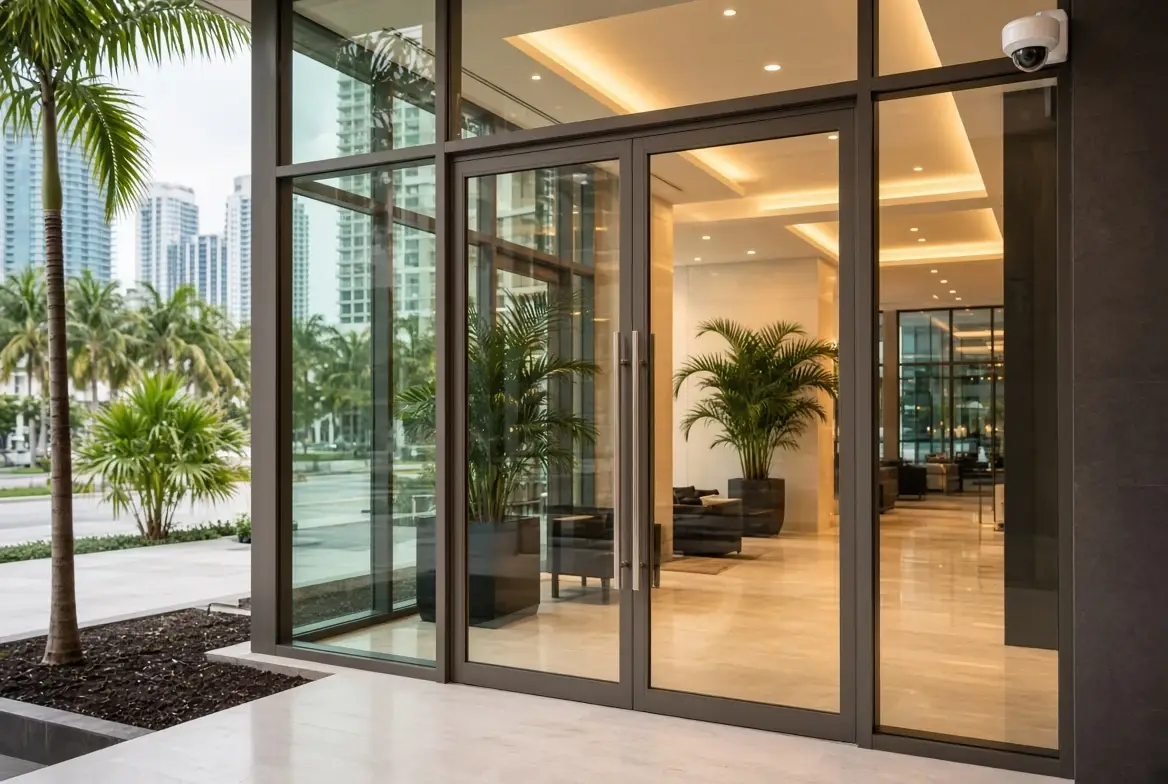
Where the cost actually appears
The visible cost is the invoice for each system. The hidden cost is operational:
-
Staff time spent managing separate logins, apps, and vendor relationships
-
Repeated service calls because no one owns the full picture
-
Shared codes or credentials that were never revoked
-
Footage or access logs that cannot be retrieved when needed
-
A conference room or public area that is used less because it is hard to operate
In restaurants, hotels, and multi-tenant buildings these costs compound. After-hours access, vendor credentials, and seasonal staff changes make the problem larger.
What a coordinated system changes
A single design and support path addresses the common friction points:
-
Access control with individual credentials and a log, instead of a shared code
-
Cameras that cover the doors and areas that matter, with usable retention
-
A network that carries the business systems without mixing guest traffic
-
Audio and lighting that can be zoned and controlled from the same interface
-
Conference or meeting spaces that turn on from one button
The systems can still be installed in phases. The difference is that each phase is designed so the next one does not require a new network or a new support relationship.
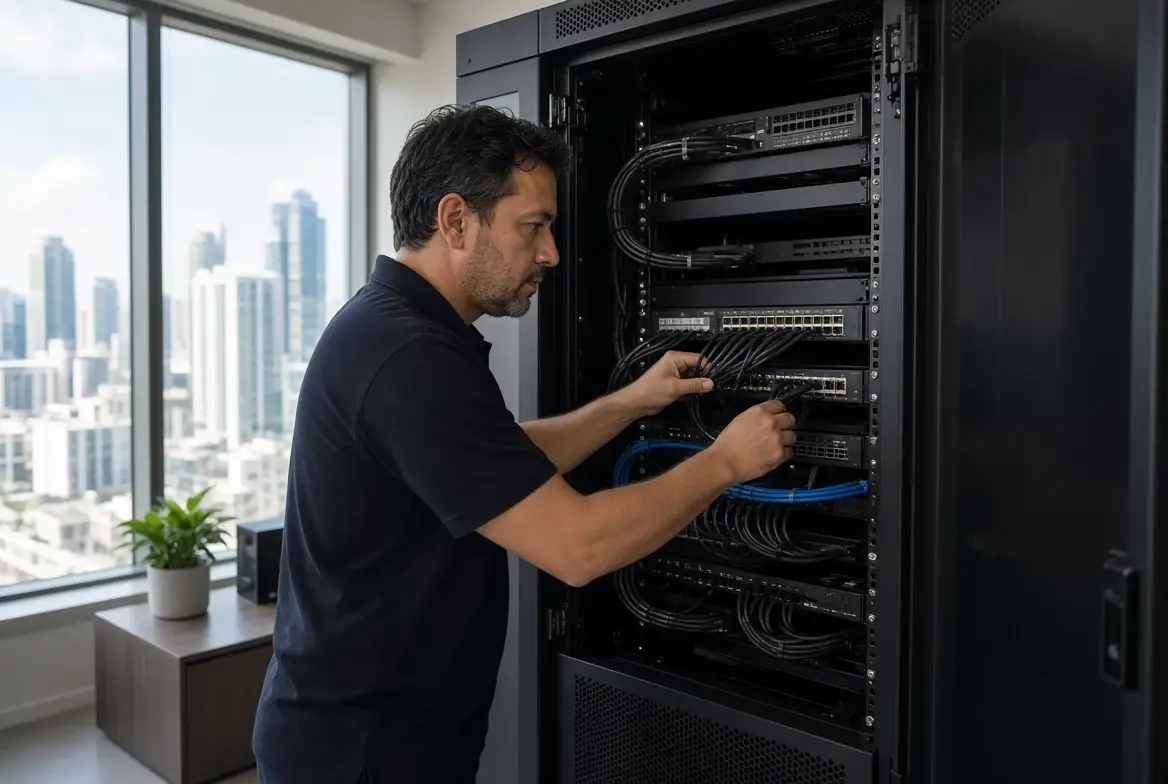
New installation vs existing building
In a new build or renovation the network closet, the reader locations, the camera paths, and the control interface are planned together. Schedules and credential types are decided before the first employee is issued access.
In an existing building the usual starting point is an assessment. Many properties already have cameras, a door system, or a conference room that no longer works cleanly. The original installer is gone or the credentials are unknown. The assessment determines what can stay, what needs to be reconfigured, and what must be replaced. Keep what works. Replace what cannot be administered.
Frequently Asked Questions
Do we have to replace everything at once?
No. An assessment identifies the highest-friction systems first. Access control and the network are frequent starting points because they affect everything else.
What if the original vendors are still available?
Coordination is still useful. A single design can reduce the number of separate apps and support paths even when different companies remain involved.
How does this relate to a system takeover?
When the original installer is no longer available, a takeover assessment is the correct first step. We check credentials, documentation, and whether the existing equipment can still be supported.
Centralized solutions
Running a Miami building through five separate systems is more expensive than the invoices suggest. Staff time, repeated service calls, unrecovered credentials, and spaces that are hard to operate add up. A coordinated design, access, surveillance, network, audio, and lighting under a clearer support path, reduces that cost. New installation or takeover, the useful version is the one that can still be administered after the original companies are gone.
Shared codes, cameras that cannot be reviewed, or a building that requires five vendors for routine issues?
Request a commercial assessment. We will tell you where the friction is and what a more coordinated path looks like.