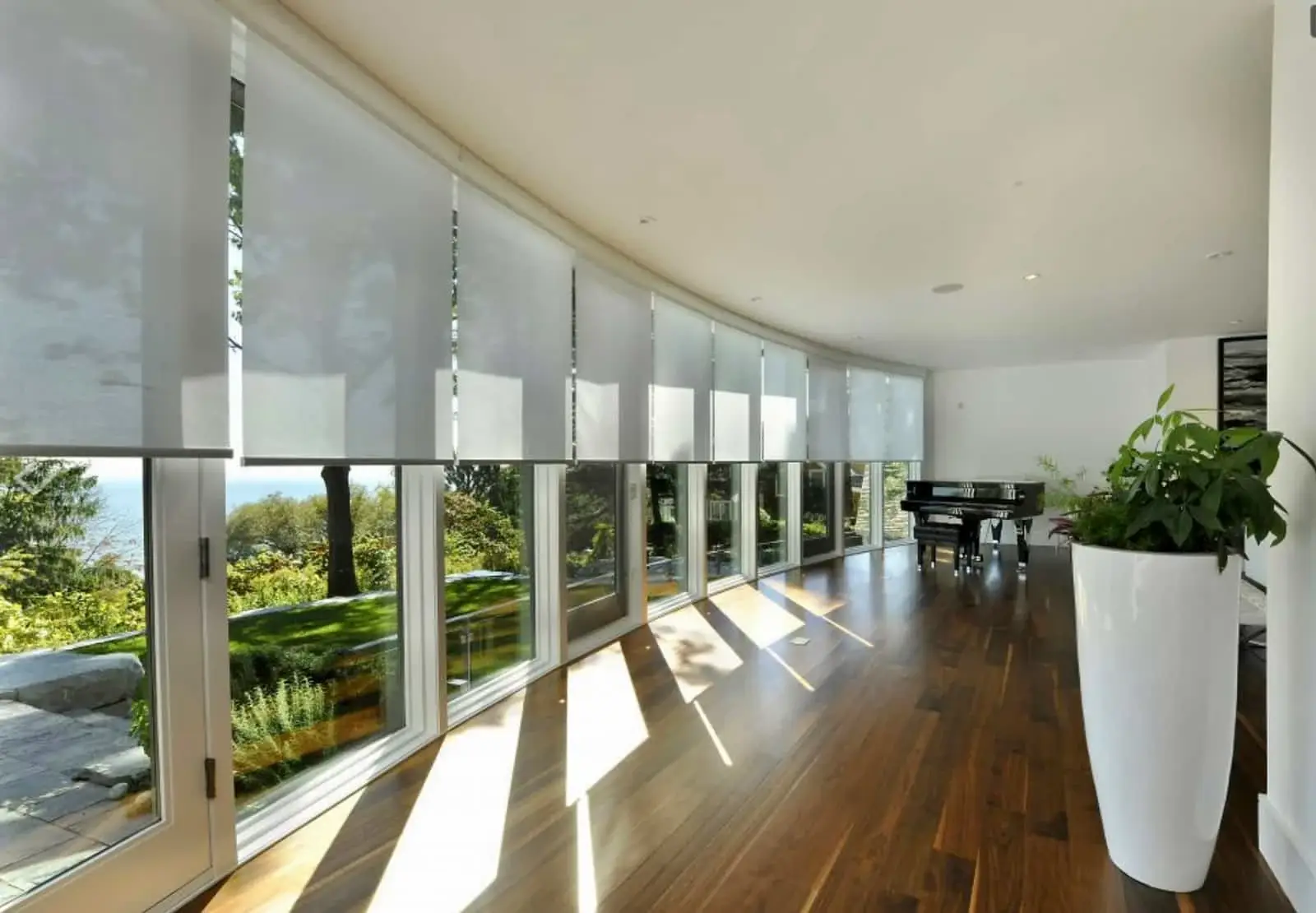
In most of the country, motorized shades are a convenience. In Miami they are closer to infrastructure.
South Florida homes are built around glass: sliders to the patio, floor-to-ceiling openings, east-west exposures, condos that bake by 2 p.m. The same glass that sells the view also drives cooling load, fades furniture, and makes a room unusable at certain hours. Pulling a cord on a 12-foot opening is not a serious answer.
Motorized shades close that gap. One keypad, one scene, or one schedule can cut glare, drop heat gain, and still keep the view. Done properly, they work with lighting, climate, and the whole-home platform — Lutron, Control4, or Crestron — instead of living as a separate remote on the coffee table.
This guide covers why shades matter here, which systems fit which house, and what has to be decided before the windows are finished.
Why Miami Is a Shade Market
Four local conditions show up in almost every project:
Sun and heat. Automated shading that tracks peak hours can take real pressure off the AC. Architects in the area treat shades as a thermal strategy, not a soft finish.
Scale of glass. High openings, corner sliders, and lanais are hard to operate by hand. If the shade is inconvenient, it stays open and the system fails in practice.
UV and interiors. Floors, art, and upholstery take a beating. A scheduled drop in the afternoon is cheaper than replacing a sofa.
Storm and travel. A whole-home “away” or pre-storm scene that closes shades (and, where specified, works alongside shutters) is more useful than a pile of individual remotes when you are already packing.
The Smart Home Studio service page already frames this: privacy, UV, energy, and scenes that include lighting and climate. The blog needs to go one level deeper — which motor, which fabric, which platform.
What “Motorized Shades” Actually Means
A complete spec is four decisions, not one product:
- Fabric — solar / sheer (view + glare), translucent, or blackout
- Motor and power — battery / wire-free vs. low-voltage wired
- Control — keypad, Pico, app, voice, or the house processor
- Integration — stand-alone Lutron/Somfy, or part of Control4 / Crestron / HomeWorks
Many disappointing jobs skip #4. The shades work. They just never join “Good evening” or “Away.”
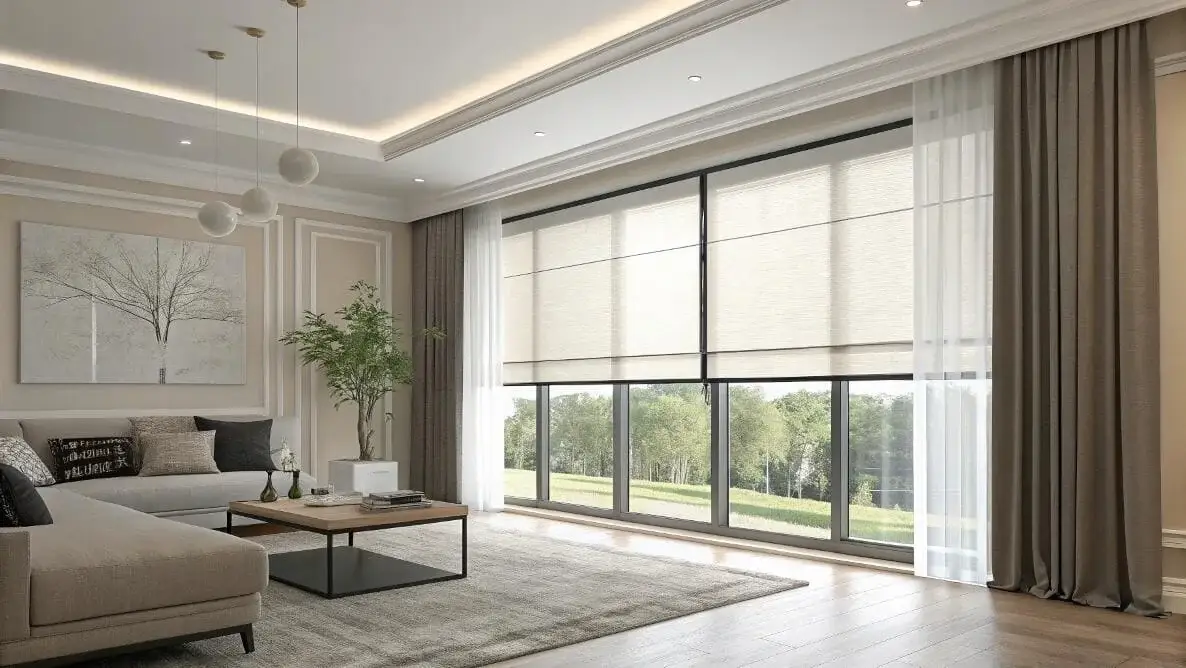
Dual treatments are common on large Miami glass: a sheer or solar shade for daytime, a blackout for bedrooms and media rooms. That only looks clean if pockets and fascia are planned with the millwork.
Lutron Shades
Lutron is the specification when lighting and shades should feel like one system.
Typical lines in residential work:
- Serena — consumer-to-pro path; often sits on Caséta
- Triathlon / Triathlon Select — wire-free or battery, strong for retrofits; multi-year battery life in normal use
- Sivoia QS Wireless — low-voltage, more custom sizes, recessed pockets, better for new construction
- Palladiom — when the hardware on the window is part of the interior design
Control lives on RadioRA 3 or HomeWorks keypads, the Lutron app, Pico remotes, and voice. Scenes can drop east glass at 2 p.m. and raise it at sunset without opening another app.
Choose Lutron shades when:
- Lutron lighting is already specified
- You want engraved keypads, not a third remote
- The designer cares about fascia, pockets, and finishes
- The house will also run Control4 or Crestron and needs a stable lighting/shade layer
Somfy Shades
Somfy is the other professional motor platform you will see on Miami bids. It is strong when the window treatment vendor is driving the package, or when the home already has mixed fabrics and needs a motor that talks to many control systems.
Typical residential path: TaHoma (or similar hub) for app, schedules, Alexa/Google, plus integration into Control4, Crestron, or Savant.
The timely detail for 2026: at CEDIA Expo, Somfy announced native Control4 integration for its Zigbee 3.0 shade motors, expected in Q1 2027. That removes extra hubs and gives two-way feedback (the processor knows shade position). For Control4 houses already in the pipeline, it is worth specifying with that path in mind rather than layering another bridge.
Choose Somfy when:
- The shade package is large and fabric-driven
- Control4 is the whole-home brain and you want a clean motor integration
- You are retrofitting motors onto treatments that are not a Lutron line
Lutron vs Somfy is not “which brand is luxury.” It is which stack the lighting, the window vendor, and the integrator can support for ten years.
How Shades Should Sit Under Control4 and Crestron
| Platform | Typical shade role |
|---|---|
| Lutron only | Lights + shades on Lutron keypads and app |
| Control4 + Lutron | Control4 runs the house; Lutron owns lights and shades |
| Control4 + Somfy | Control4 scenes call Somfy motors (native Zigbee path coming Q1 2027) |
| Crestron + Lutron HomeWorks | Deep architectural lighting and shading, one design |
| Crestron Home | Whole-home shading tile; shades treated like lighting |
Battery vs Wired
Battery / wire-free
Best for finished condos and retrofits. No new home-runs. Plan battery access and a service schedule. Fine for many bedrooms and standard openings.
Low-voltage wired
Best for new construction, large sliders, dual shades, and pockets in the ceiling. More reliable long-term. The wire has to be in the wall before drywall.
If the house is in framing, wire the openings even if you start with battery motors. Retrofitting power later is the expensive version of the same decision.
What to Specify Before Construction
If this is new work or a renovation, lock these before the window order:
- Pocket vs. inside mount vs. fascia
- Dual shade stacks on west and south glass
- Power at each opening (or a documented battery plan)
- Keypad locations that replace a wall of switches
- Fabric openness (solar % vs. blackout) per room — view vs. sleep vs. media
- How “Away,” “Storm,” and sunset scenes will use the shades
- HOA or building rules in condos (exterior color, fascia, motor noise)
The cheap mistake is buying beautiful fabric and discovering the pocket is 1 inch too small.
Cost Reality (Orientation, Not a Quote)
Published South Florida ranges vary by size and fabric. A single standard motorized roller can land in the mid-hundreds to low thousands installed. Whole-home glass in a waterfront or Brickell-type residence is a project, not a per-window impulse buy.
What moves the number:
- Width and height of sliders
- Dual shades
- Wired vs. battery
- Lutron architectural hardware vs. simpler rollers
- Integration and scene programming
- Access (ladders, occupied condos, after-hours)
Ask for a room-by-room schedule: opening, fabric, motor, control, power. That document is the quote.
Scenes That Actually Get Used in Miami
Keep the list short:
- Morning — raise living and kitchen; leave bedrooms down
- Afternoon sun — drop west/south solar shades
- Evening / patio — interior lights warm, sheers to privacy, outdoor lights on
- Movie / guest suite — blackouts
- Away — close, or set to a privacy position
- Storm prep — close interior shades as part of a larger checklist (not a substitute for rated shutters)
If the household only remembers two scenes, those two should work from a keypad without a phone.
Frequently Asked Questions
Do motorized shades replace hurricane shutters?
No. They help with sun, privacy, and a prep scene. Impact glass and rated shutters are a different specification.
Will they work in a concrete condo?
Yes, if the RF plan is honest. Lutron Clear Connect and professional Somfy setups are used in high-rises for that reason. Cheap Wi-Fi motors are the ones that drop.
Can I automate shades I already have?
Sometimes, if the size and fabric allow a retrofit motor. Measure first. Not every existing roller accepts a quiet professional motor cleanly.
Is this only for luxury houses?
No. A few problem windows (west living room, primary suite) already pay for themselves in comfort. Whole-home glass is where the full Lutron/Somfy + processor stack belongs.
Do you design shades with lighting and the control system?
Yes. The useful installation is lighting + shades + scenes, not a separate shade remote.
Treat Glass Like a System
In Miami, the view is the amenity and the heat source. Motorized shades are how those two facts coexist.
Specify fabric for the exposure, power for the construction stage, and a platform that already runs the lights — Lutron when lighting leads, Somfy when the treatment package or Control4 motor path leads, Crestron when the house is a full custom system.
The wrong time to think about pockets and wiring is after the ceiling is closed.
Planning shades for a Miami home or condo?
Book a design review. We can map openings, recommend Lutron or Somfy, and integrate shades with RadioRA, HomeWorks, Control4, or Crestron so they show up in the same scenes as the lights.